


Stay Informed
We love building relationships. Subscribe to our blog to receive weekly encouragement and monthly eNews for ministry updates in your email inbox.
Search Our Blog Posts
Blog Article Tags
Deprecated: htmlspecialchars(): Passing null to parameter #1 ($string) of type string is deprecated in /home/irsm/public_html/modules/mod_tagtransform/mod_tagtransform.php on line 12
Visit Our Store
Donate
You can also mail checks, made out to IRSM, to:
Iron Rose Sister Ministries
PO Box 1351
Searcy, AR 72145
IRSM is a 501(c)(3), so donations are tax-deductible.
Blog
More blog entries below
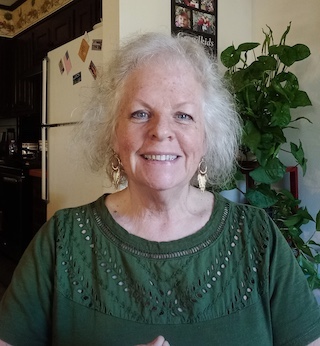 Written by Kathy Reagan, volunteer with Iron Rose Sister Ministries in Texas
I’ve been a gardener for many years. Isn’t it wonderful how God teaches us life lessons using His creation?
I planted a large garden several years ago, together with my daughter-in-law, Sharon. We had a friend with a tractor come in and clear a huge area for us; we were so excited! It took two whole days of toiling in the garden to plant everything we wanted to raise, including blueberry bushes, a nice selection of herbs, a wide variety of vegetables, and even a few fruit trees. We could already taste the fruits and veggies! And imagine the yummy variations of common dinners with fresh herbs added!
Well, that year was the rainiest summer on record; cloudy every day, very little sunshine all summer long. (And that was very rare for our part of Colorado!) Needless to say, we yielded very little from our enormous garden; just a few carrots, if I remember right.
What can we learn from this experience?
We, like a garden, need sunshine to grow and bear fruit! The Word tells us to “…grow in the grace and knowledge of our Lord and Savior Jesus Christ” (2Pe 3:18a ESV). We see it is God’s will for us to grow in our spiritual walk with Him. In fact, it is our privilege and joy to look back and see the spiritual growth in our lives!
Our goal is spiritual maturity so that we can bear fruit, being established in our faith, with roots that sink deep and anchor us to our Creator (Col 2:7).
And just like my garden, our growth to maturity requires light.
One definition of light is perfect brightness, pure radiance.
God is light, and in Him is no darkness at all (1Jn 1:5a).
How do we feast on the Light to grow?
- Long for the pure milk of the Word. “Like newborn infants, long for the pure spiritual milk, that by it you may grow up into salvation” (1Pe 2:2). Like a baby longs for mama’s milk and needs it to survive, we long to be fed by God’s Word, His teaching. Just like a newly planted garden draws its nourishment from light to grow, we feast on Jesus’ light in God’s Word.
- Walk in the Light. “For you were formerly darkness, but now you are light in the Lord; walk as children of light, (for the fruit of light consists in all goodness and righteousness and truth), trying to learn what is pleasing to the Lord” (Eph 5:8-10 NASB). God’s glorious light warms us, feeds us, leads us, and lights our path. “Your Word is a lamp to my feet and a light to my path” (Ps 119:105 ESV).
- Squash the darkness. Remember that “God is light and in Him is no darkness at all” (1Jn 1:5a), so, as we try to learn what pleases Him…
- We need to pull weeds that pop up constantly in our lives. “…let us lay aside every encumbrance and the sin which so easily entangles us and run with endurance the race that is set before us” (Heb 12:1 NASB).
- Pruning is necessary. “Put to death therefore what is earthly in you: sexual immorality, impurity, passion, evil desire and covetousness, which is idolatry” (Col 3:5 ESV). Just like we trim back weak areas of our healthy plants to keep them growing well, sometimes we must prune our own lives!
When we grow to spiritual maturity, the Light can’t help but shine brightly out of us, and we bless the world as they see our Father in us and are drawn to Him.
You are the light of the world. A city set on a hill cannot be hidden. Nor do people light a lamp and put it under a basket, but on a stand, and it gives light to all in the house. In the same way, let your light shine before others, so that they may see your good works and give glory to your Father who is in heaven. (Mt 5:14-16)
Just like my garden, when the light is obstructed or limited, growth slows to a crawl, and there may be no fruit at all – or even death.
Sisters, allow me to strongly encourage us all to let the Light shine brightly inside us daily by nourishing our spirits in God’s Word, walking daily in the glorious light of Jesus’ example, and taking regular inventory of our own spiritual growth so we can consistently weed out the sin that wants to grow slowly up around us and strangle us.
Then Jesus’ glorious light will shine out of us to bless the world and those around us, and we will bear fruit and be pleasing to the Father of lights (Jas 1:17)!
 Written by Abigail Adriana Loayza Becerra, volunteer with Iron Rose Sister Ministries in Cusco, Peru
Instead, speaking the truth in love, we will grow to become in every respect the mature body of him who is the head, that is, Christ. From him the whole body, joined and held together by every supporting ligament, grows and builds itself up in love, as each part does its work. (Eph 4:15-16, NIV)
This is to my Father’s glory, that you bear much fruit, showing yourselves to be my disciples. (Jn 15:8)
How many times have we heard or said: "That's not my gift"?
We often say that when someone invites us to serve, to teach, to evangelize, or even just to listen. Without realizing it, that phrase becomes a shortcut to avoid commitment and an excuse not to participate in the mission that Jesus left us. It is true that God has given each of us different gifts. The Bible tells us that the body of Christ is made up of many parts and each one fulfills a different function: some teach, others encourage, others serve, others lead, others show mercy, etc., etc. And having different gifts does not mean that some believers are exempt from bearing fruit or making disciples.
Ephesians 4 explains that each member of the body contributes something indispensable to the Church. When each member uses the gifts God has given them, the body grows, becomes stronger, and reflects the love of Christ. The problem begins when we hide our talents behind phrases such as "that's not my gift," "I'm not good at that," or "it's better for someone else to do it." Many times, it is not a lack of capacity, but fear, comfort, insecurity, or lack of willingness.
Nor did Jesus say that only some should bear fruit. In John 15:8, He affirms that the Father is glorified when we bear much fruit and prove that we are His disciples. Bearing fruit doesn't just mean preaching from a pulpit. We bear fruit when we disciple someone, when we serve with joy, when we show hospitality, when we listen to those who need comfort, when we manage our resources well, or use our abilities to bless others.
The gifts God gives us are not for our own benefit, but for the edification and growth of the Church so that others may know Christ. Every gift, every talent can be a tool to spread the Kingdom of God. Many times, we expect to feel prepared to serve, but if we are willing to use the gifts God gave us, even if we feel unprepared, He will empower us as we act in obedience (like Moses, Deborah, Gideon, and many more).
Maybe your gift is teaching, singing, encouraging, evangelizing, organizing, cooking, writing, listening, administering, etc. No gift is too small when it is used with love, willingness, and above all, with the intention of glorifying God. One of the most important things is that we do not go around comparing gifts, but instead that we focus on being faithful to God with the gifts He has entrusted to us.
When we stop making excuses and serve willingly and intentionally, and when each member decides to take the place God has prepared for them, we discover that God can do more than we can imagine. We will see lives transformed, we will see the Church grow, we will see people being strengthened. Let us not allow the phrase "that is not my gift" to prevent us from obeying Christ's call for us, but let us instead ask ourselves, "How can I use what God has already placed in my hands to bear fruit and make disciples?" In the end, we may not be remembered for the gifts we had, but rather for our faithfulness in using them for the glory of God.
What gift, talent, or ability has God given you that you may have been putting aside out of fear or excuses, and how can you begin to intentionally use it to bear fruit and make disciples this week?