

-
Doing God's Will and Bearing Fruit is Our Sustenance
 Written by Ayane Nayara, Brazil Assistant with Iron Rose Sister Ministries
“My food,” said Jesus, “is to do the will of him who sent me and to finish his work.” (John 4:34 NIV)
The word "hyperfocus" describes the act of devoting your full attention to something for an extended period. It is when we find something that feels exactly right to do at a given moment, and we become so focused and determined to complete it that we even forget to eat. In that moment, it is our source of delight; nothing else matters. We even neglect our basic needs.
In the John 4 text, we read about the moment Jesus meets the Samaritan woman. As mentioned in the text, Samaritans and Jews did not get along (Jesus was a Jew; the woman, a Samaritan). When the disciples find them talking, they find it quite strange, but they do not question it.
From the beginning of the Gospel of John, we see Jesus in action. He is described as the Word in action. Before reaching chapter 4, we see a series of encounters He had with certain people—encounters that bore fruit.
Christ came into the world with a very clear mission: to preach the Word of God and bring the message of the hope of salvation to all peoples.
You see, the Samaritan woman was not someone who did not know God; on the contrary, she was awaiting the arrival of the Messiah, expecting Him to come and explain the true nature of worship. Yet, her hope for salvation was being undermined by those who ought to have brought that very hope to her—in the eyes of the Jews, she was condemned and not even considered part of God’s people. (The Samaritans originated from a history of Israelites intermixing with other peoples, leading the Jews to reject them as God's people. On top of this, differences in religious practices fueled tension between the two groups.)
In this encounter, we see Jesus fulfilling His mission—restoring that woman's hope. He was not concerned with whether lunchtime had already passed or whether she would serve Him the water; what we see here is an intentional act of drawing near and touching her life.
That was Jesus’s hyperfocus: bearing fruit. That was what He fed His Spirit with—fulfilling the mission to which He had been appointed.
God has also called us to a great mission—to be salt and light in this world. This entails presenting the Gospel message to those who do not know it, restoring hope to those deemed unworthy of salvation through the message of the cross, and living in love with His people—the church.
Unfortunately, we live in a world where attention to one's own needs often takes precedence over others. There is constant talk of high performance—of how YOU can achieve YOUR goals and YOUR objectives—yet we often overlook the true value of the fruit we bear. While we race after things that will remain in this life, Christ calls us to a mission that yields eternal fruit—our own spiritual growth and the rescue of the lost.
I am not suggesting that we stop eating or forget about the life we live here. Rather, I am urging us to reflect on what our priorities have been as we live as people who have decided to follow the Master’s call.
Since, then, you have been raised with Christ, set your hearts on things above, where Christ is, seated at the right hand of God. Set your minds on things above, not on earthly things. (Col 3:1-2)
We need only look around us to see people who do not yet know the Savior—people who have heard of Him but have not been fully taught, and those who need to encounter the Jesus who is the source of living water, full of grace and mercy for those whom others condemn as unworthy of His word.
We have a Spirit within us which feeds on the practice of God’s justice—the same Spirit that dwelt in Christ (John 1:32–33) and found fulfillment in doing the Father’s will. The Spirit hungers and thirsts for this action, and God has promised to satisfy us (Matt 5:6).
The disciples were surprised by Jesus’s action because they saw only an unworthy woman, but Jesus saw soil ready to receive the seed of the Gospel and be watered by living water. He saw in that moment yet another fulfillment of His mission—not merely a task checked off a list, but fruit ready to be produced.
And what about us? Where are we nourishing our spirit? Where is our hyperfocus directed?
-
Growth and Harvest
 Written by Kim Solis, volunteer with Iron Rose Sister Ministries in Oregon
Matthew 9:37–38 says:
The harvest is plentiful, but the workers are few.
Ask the Lord of the harvest, therefore, to send out workers into his harvest field. (NIV)Whenever I think about this passage, I picture men and women working in a field, gathering the harvest from what has already been planted. It is hard work, the kind of work most people would rather avoid. It requires time, effort, and energy, resulting in aching backs, rough hands, dirty knees, and often blood, sweat, and tears.
Many sermons, lessons, and exhortations focus on asking Christians whether we are working in the field, participating in the harvest by talking to people about God and explaining His plan of salvation.
The Spanish TLA (Traducción en Lenguaje Actual, or Translation in Contemporary Language) says:
Jesus said to his disciples, “There are many people who need to enter the kingdom of God, but there are very few disciples to tell them the good news.
So ask God to send more disciples to share the good news with all those people.”Working in the field, harvesting = proclaiming and sharing the good news with people.
Many times, we think the right way to “evangelize”—to share the good news—is primarily through evangelistic campaigns, knocking on doors, or handing out flyers in the street. And often the approach begins by pointing out people’s sins or errors: telling them they are lost, that only Jesus can save them, that they need to repent and be baptized for the forgiveness of their sins, and rise with Him to a new life.
I agree with that message. What I question is whether pointing out what is wrong and correcting people should be the starting point.
The good news is, after all, GOOD.
It announces that the lame can now walk, the deaf can hear, and the captives have been set free. In the gospels, Jesus’ strongest rebukes were directed toward those who already knew the Scriptures and claimed to know God. But when He approached the hurting, the marginalized, and those who were far from God, He often began by meeting their physical needs and, perhaps even more importantly, their emotional ones. He offered compassion, acceptance, dignity, and friendship. And from within that relationship, He taught them a new way to live.
First Peter 3:15–16 says that we should always be prepared to give a defense for the hope that is within us.
That means there must first be a hope within us that others can see.
People notice our peace, our hope, the way we love, and the way we live. And that difference should naturally lead them to ask why something is different about us.
But being a worker in the field also involves much more than speaking words of explanation or instruction.
No harvest would ever happen if someone had not first planted, watered, and cultivated with intention, attention, patience, care, and love.
Paul’s words in 1 Corinthians 3:6–7 come to mind:
I planted the seed, Apollos watered it, but God has been making it grow.
So neither the one who plants nor the one who waters is anything, but only God, who makes things grow. (NIV)When we show people mercy, when we are generous with our affection, our resources, and our time, when we help, encourage, and walk alongside others, we are planting, watering, and cultivating, even before we ever open the pages of a Bible.
First John 4:11–12 says:
Dear friends, since God so loved us, we also ought to love one another.
No one has ever seen God; but if we love one another, God lives in us and his love is made complete in us.People cannot see God. But when they see the love we show one another and the love we extend to those around us, they can catch a glimpse of Him. God becomes present among us, and His love is made visible in a way others can experience.
That, too, is sharing the gospel.
That, too, is proclaiming the good news.
That, too, is taking part in the work of the field and the harvest.So, what are you doing today to participate in the work of the field?
Are you planting?
Are you watering?
Are you cultivating with love, generosity, and mercy?Or perhaps today is a day for harvesting—being ready to explain the hope within you and to tell someone that the same hope is available to them.
We do not all do the same part of the work at the same time.
Some plant. Others water. Others harvest. But God is the One who gives the growth.
-
Growth Requires Light
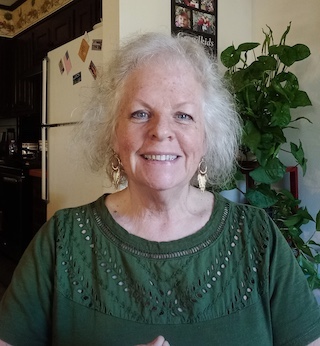 Written by Kathy Reagan, volunteer with Iron Rose Sister Ministries in Texas
I’ve been a gardener for many years. Isn’t it wonderful how God teaches us life lessons using His creation?
I planted a large garden several years ago, together with my daughter-in-law, Sharon. We had a friend with a tractor come in and clear a huge area for us; we were so excited! It took two whole days of toiling in the garden to plant everything we wanted to raise, including blueberry bushes, a nice selection of herbs, a wide variety of vegetables, and even a few fruit trees. We could already taste the fruits and veggies! And imagine the yummy variations of common dinners with fresh herbs added!
Well, that year was the rainiest summer on record; cloudy every day, very little sunshine all summer long. (And that was very rare for our part of Colorado!) Needless to say, we yielded very little from our enormous garden; just a few carrots, if I remember right.
What can we learn from this experience?
We, like a garden, need sunshine to grow and bear fruit! The Word tells us to “…grow in the grace and knowledge of our Lord and Savior Jesus Christ” (2Pe 3:18a ESV). We see it is God’s will for us to grow in our spiritual walk with Him. In fact, it is our privilege and joy to look back and see the spiritual growth in our lives!
Our goal is spiritual maturity so that we can bear fruit, being established in our faith, with roots that sink deep and anchor us to our Creator (Col 2:7).
And just like my garden, our growth to maturity requires light.
One definition of light is perfect brightness, pure radiance.
God is light, and in Him is no darkness at all(1Jn 1:5a).
How do we feast on the Light to grow?
- Long for the pure milk of the Word. “Like newborn infants, long for the pure spiritual milk, that by it you may grow up into salvation” (1Pe 2:2).Like a baby longs for mama’s milk and needs it to survive, we long to be fed by God’s Word, His teaching. Just like a newly planted garden draws its nourishment from light to grow, we feast on Jesus’ light in God’s Word.
- Walk in the Light. “For you were formerly darkness, but now you are light in the Lord; walk as children of light, (for the fruit of light consists in all goodness and righteousness and truth), trying to learn what is pleasing to the Lord”(Eph 5:8-10 NASB).God’s glorious light warms us, feeds us, leads us, and lights our path. “Your Word is a lamp to my feet and a light to my path”(Ps 119:105 ESV).
- Squash the darkness. Remember that “God is light and in Him is no darkness at all” (1Jn 1:5a),so, as we try to learn what pleases Him…
- We need to pull weeds that pop up constantly in our lives. “…let us lay aside every encumbrance and the sin which so easily entangles us and run with endurance the race that is set before us”(Heb 12:1 NASB).
- Pruning is necessary. “Put to death therefore what is earthly in you: sexual immorality, impurity, passion, evil desire and covetousness, which is idolatry”(Col 3:5 ESV).Just like we trim back weak areas of our healthy plants to keep them growing well, sometimes we must prune our own lives!
When we grow to spiritual maturity, the Light can’t help but shine brightly out of us, and we bless the world as they see our Father in us and are drawn to Him.
You are the light of the world. A city set on a hill cannot be hidden. Nor do people light a lamp and put it under a basket, but on a stand, and it gives light to all in the house. In the same way, let your light shine before others, so that they may see your good works and give glory to your Father who is in heaven.(Mt 5:14-16)
Just like my garden, when the light is obstructed or limited, growth slows to a crawl, and there may be no fruit at all – or even death.
Sisters, allow me to strongly encourage us all to let the Light shine brightly inside us daily by nourishing our spirits in God’s Word, walking daily in the glorious light of Jesus’ example, and taking regular inventory of our own spiritual growth so we can consistently weed out the sin that wants to grow slowly up around us and strangle us.
Then Jesus’ glorious light will shine out of us to bless the world and those around us, and we will bear fruit and be pleasing to the Father of lights (Jas 1:17)!
-
Living Water, Lasting Growth
 Written by Kat Bittner, volunteer with Iron Rose Sister Ministries in Colorado
Growth is a natural expectation of life. Whether we are talking about a plant, a tree, the physical body, or a spiritual walk, healthy growth requires consistent nourishment. One of the most essential elements for growth is water. Without it, even the strongest seed or healthiest vine will struggle to survive. The same principle applies to our relationship with God.
In Ezekiel 19:10, the prophet proclaims, "Your mother was like a vine planted by the water's edge. It had lush, green foliage because of the abundant water." (NLT)
This beautiful image reminds us that fruitfulness is connected to a reliable water source. The vine did not become fruitful on its own. It flourished because it was planted where it could continually receive the water needed to sustain life and growth.
Anyone who has cared for a garden understands the importance of water. Even if planted in good soil, without water, a garden cannot develop roots, produce leaves, or bear fruit. Water feeds the life within a plant and enables it to become what it was created to be.
The same is true for us as Christians. We want a stronger faith, greater wisdom, better relationships, and a deeper purpose in life. We want to become what we were created to be. Yet growth does not happen simply because we want it. We need to be fed and nurtured continually. Like the vine in Ezekiel, we must remain connected to a source that continually nourishes us. God never intended for us to survive on occasional inspiration. He calls us into a daily relationship where His presence refreshes, strengthens, and transforms us over time.
When Jesus met the Samaritan woman at the well, He shifted the conversation from physical water to a much deeper need. In John 4:13-14, Jesus said, "Anyone who drinks this water will soon become thirsty again. But those who drink the water I give will never be thirsty again. It becomes a fresh, bubbling spring within them, giving them eternal life.”
Spiritual growth is not an overnight transformation. Rather, it is a lifelong journey of being nourished by Christ, our Living Water, on a regular basis. Just as a vine planted by abundant waters grows strong, fruitful, and resilient, we too become spiritually healthy when we remain connected to Jesus. Through regular study of God's Word, prayer, worship, and the guidance of trusted spiritual mentors, God gradually shapes our character, deepens our faith, and equips us for His purposes.
When we intentionally seek Christ each day, we can trust that He will provide the nourishment we need for every season. There will be seasons of rapid growth and seasons where growth seems stagnant. The key is to stay planted near the source of water. When we remain rooted in Jesus and open to His teaching, growth becomes the natural result of a life continually refreshed by the Living Water. And He is the source of water that never runs dry.
This message of spiritual growth can be beautifully summarized by Psalm 1:2-3: "But they delight in the law of the Lord, meditating on it day and night. They are like trees planted along the riverbank, bearing fruit each season. Their leaves never wither, and they prosper in all they do.”
The woman at the well delighted in what Jesus told her and asked to be given this water so that she’d “never be thirsty again” (John 4:15). Never thirst again. Like the plant which remains embedded in the water, we will never be thirsty if we are continually fixed on Jesus. We will flourish in the source of living water, Jesus.
What will you do to be nourished by the Living Water? How can you have lasting growth?
-
Planning for Growth; Planting Vineyards
 Written by Leylane Bertoldo Campos, volunteer with Iron Rose Sister Ministries in Recife, Pernambuco, Brazil
The saying "practice makes perfect" is a classic across many cultures. Whether you are reading this blog post in Portuguese, English, or Spanish, you have surely heard it before. But is it really that simple? I have heard that some psychologists and neuroscientists prefer to make a slight correction to this adage. They say that "practice leads to permanence," but not necessarily to perfection. This is because, if you practice something the wrong way, your brain will reinforce that error. With this in mind, we can apply this logic to our walk with God, as the risk is very similar. When we try to practice a godly life in the wrong way, we may pursue a perfection that will never come. Instead, we can seek a godliness that pleases God—not to become perfect, but to become mature and fruitful.
It is common to see a simplified view of spirituality within our community. For some, regularly attending church activities, mechanically reading a chapter of the Bible, and saying a quick prayer before bed make up a sort of “holiness combo.” While these actions are essential when performed intentionally, reducing faith to a checklist can be an unwise and haphazard way to nurture our spiritual lives. We need to understand that biblical faith is not passive. God’s wisdom also manifests itself through strategy and planning—and this is precisely what the woman of Proverbs 31 demonstrates.
She considers a field and buys it; out of her earnings she plants a vineyard. (Prov 31:16 NIV)
The woman of Proverbs 31 has a very clear vision of her future. Notice that she does not buy a property on impulse; she examines it before making that decision. When examining a property, it is necessary to patiently assess its suitability for the intended purpose—in this case, planting a vineyard. There is a principle of biblical wisdom here. In Proverbs, the wise person observes, ponders, and acts with discernment.
In this verse, we also see a woman who devoted her efforts to planting a vineyard—an undertaking that requires long-term vision. An experienced winegrower knows that the entire process of planting a vineyard demands patience. In the early years, the project may appear stagnant. Yet, it is beneath the soil—hidden from our view—that the real work takes place. That is where the plant expends all its energy, driving its roots as deep as possible to absorb the necessary nutrients. If it were to bear fruit without deep roots, its entire structure could be compromised. This reminds us that Christian maturity also requires the patience of cultivation—a practice that will lead us to become like Christ.
At first glance, we might view this verse merely as guidance regarding business or finances. However, God’s wisdom is reflected in our everyday lives. The way we examine our choices also reflects the state of our hearts. The daily actions we take are deeply connected to good habits that can draw us closer to God.
Have you ever stopped to consider how you make your decisions? How you manage your resources? How you plan your time, handle your money, or use your talents? Do you seek to make decisions based on God’s wisdom, rather than on a desire for instant results or emotional neediness?
Just like a vineyard, spiritual growth requires daily consistency, pruning, and great patience. A truly worthwhile spiritual life does not happen overnight, nor does it arise from vain repetitions devoid of purpose or planning. Whether at home, at work, or in the church, we need to apply God's wisdom to every decision we make—examining matters and planning for the long term.
Christian women seek the success of the Kingdom of God above all else; they examine their attitudes and manage with discernment what God has placed in their hands. Which "soil" do you need to examine more mindfully right now before making a decision? Have you been planting vineyards for the future, or living merely for present impulses? Have you been spending your energy planting vineyards that will nourish your future, or have you spent your days reacting only to the impulses and urgencies of the present?
James 5:7-8 says: “Be patient, then, brothers and sisters, until the Lord’s coming. See how the farmer waits for the land to yield its valuable crop, patiently waiting for the autumn and spring rains. You too, be patient and stand firm, because the Lord’s coming is near.”
Begin today what you hope for tomorrow. Prepare yourself for the coming of Christ. Pray today for the future of your marriage. Pray today for your baby’s teenage years, or for the future spouses of your young children. Seek today the spiritual growth you desire for your future. Practicing a godly life may not lead to the perfection the world seeks, but it will certainly lead us to a fruitful life—a practice carried out in the right way, as God desires and has taught us, so that we may strengthen our hearts, for the coming of the Lord is near.


See more photos on our Photo Gallery page.
(c) Iron Rose Sister Ministries. Site setup by Perfect Fit Web Design; Flag icons by Free Flag Icons