

-
A Wise Woman of Action
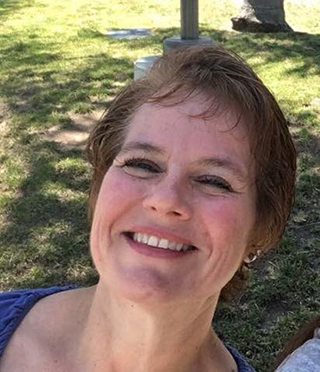 Written byKat Bittner, Volunteer and Board Member with Iron Rose Sister Ministries
I recall a time struggling to understand faith vs. works. There was a tendency growing up to believe that one had to be “doing good” to get to Heaven. And I was consumed by that belief. I battled internally with guilt – and fear – that my faith wasn’t sufficient because I wasn’t doingenough. Even after marrying a faithful believer, becoming a mother, and making a home, I felt inadequate as a Christian woman.
However, a wise, Godly woman speaking at a ladies’ event helped me understand something that changed my thinking. It was my flawed perspective on “doing good” that kept me from being the faithful woman of God I wanted to be… and that God had intended for me. She said it starts with a faithful fear of the Lord.
What’s required of us by God is to “fear the Lord…and live in a way that pleases Him” (Dt 10:12 NLT). She further explained that the fear of the Lord is not being afraid of God, or His wrath and punishment, or not going to Heaven. Rather, it is reverence and awe of His holiness and submission to Him. Scripture tells us that the fear of the Lord produces wisdom (Ps 111:10) and faithfulness (Pr 2:1-6; Jas 3:13). And faithfulness is revealed by our fruits or good deeds (Mt 7:17-20). And I learned from this wise woman’s counsel and further study on my own that I am not doing goodto be faithful, but the other way around. BecauseI amfaithful, I do good.
I will show you my faith by my good deeds. (Jas 2:18)
I have also come to appreciate that the more I grow in my faith, the more active in my faith I am (Jas 2:18, 24). Because I was “created in Christ Jesus to do good works which God prepared in advance for us to do” (Eph 2:10 NIV), I pursue those things which God has gifted me to do. For example, I am passionate about women’s and children’s ministries and devote a lot of my time teaching and serving in areas that further those efforts, like Iron Rose Sister Ministries and Ciudad de Angeles in Cozumel, Mexico. In my home congregation, I teach the 2- and 3-year olds’ Bible class and VBS, serve on our Women’s Ministry Committee, lead several women’s events and classes, and organize the ministry that serves meals to families in need within our congregation. God has also called me to do a good work with my gift and love for singing. I do this by spreading the name of Jesus in sacred song with the community choir of which I’m a part.
I do all this not to earn my way to Heaven, nor do I share this with you to boast. On the contrary, I am active in all this because each day I only want to please the Lord in doing what He has ordained for my life(Ps 139:16). I want to do good things to honor and glorify God because I love Him, and I am thankful to be in relationship with Him. Put simply, I want to do these things. As we have been commanded to “love each other just as I have loved you” (Jn 13:34 NLT), I want to do them because I express my love for God by doing things for others in love.
Every woman is equipped to put her faith into action with the good works that God has especially designed for her. Not every woman will teach. Not every woman will sing. Not every woman will be a wife or mother. But every woman can increase in wisdom through the fear of the Lord. And the wise woman who does good reveals her faithfulness by what she does. And she is to be praised for it (Pr 31:30-31)!
From the mundane task to the most benevolent act – all things should be done for God’s glory and in service to Him (Col 3:23-24). Our faithfulness to God is revealed through the deeds we do, which He has prepared for us according to the unique way He created each of us.Theologian and evangelist John Wesely sums it up well with the following synthesis of his teachings and sentiments: “Do all the good you can, by all the means you can, in all the ways you can, in all the places you can, at all the times you can, to all the people you can, as long as ever you can.”
What will you do as a wise woman of action, showing your faithfulness to God?
-
May You Continue to “Practice Like a Wise Woman”
 Written byMichelle J. Goff, Founder and Executive Director of Iron Rose Sister Ministries
The year 2025 has provided ample opportunity to learn and practice wisdom. As with any type of practice, we did not do it perfectly from the start, but learned along the way and grew as a result.
Faith is a wise woman practice. It is a noun, but one that implies action. The apostle James stated, “But someone will say, ’You have faith; I have deeds.’ Show me your faith without deeds, and I will show you my faith by my deeds”(Jas 2:18 NIV). The more we exercise our faith, the stronger it grows. Others see evidence of our faith by our actions.
Hebrews 11 is the highlight reel for many heroes of the faith. It is like the social media summary of their spiritual lives. That brief description of their faith does not permit the detailed retelling of what happened throughout their stories. Each of them had to practice their faith over time. Generations later, we see the fruit of their faith.
Over the past year, women from across the Americas have shared their own words of wisdom as we have highlighted different facets of “Practice Like a Wise Woman.” Whether you read every post as it was published or are a new reader of our blog, we invite you to scroll back through the articles from this past year and reflect on the impact of practicing like wise women who build their houses on the Rock (Mt 7:24).
We should all “Pray about it!” Instead of getting frustrated about what we can’t do, remember when Jesus recognized the woman who sacrificed for Him. In His own words, “She Did What She Could,” preparing Christ’s body for His burial. During the month in which we celebrate the resurrection, we turned to what it means to “Follow in His Steps.” Christ reminds us that we, the church, are His bride. Are you “Rehearsing for the Big Event”? As we practice and prepare, we undergo a “Transformation.”
During the second half of the year, we looked to scriptural and everyday examples that can say, “Follow Me, As I Follow Christ.” When we do so effectively, we enter into “Disciple Training,” but since that training is riddled with mistakes, also known as learning opportunities, we question: “Practice Makes Perfect?”
Therefore, to finish the year strong, we circled back to our primary emphasis by centering on “Wise Woman Practices,” even demonstrated and discussed in a trilingual virtual event. Through the month of November, during which many practice the spiritual discipline of giving thanks, we “Practiced Thanksgiving.” And then, to finish out the year, we have looked to “Wise Women in Action” as our inspiration in preparation for the new year to come.
Each of these topics has been rooted in faith—a faith we have been putting into practice.
Thank you to our faithful readers, to those who respond with encouragement and feedback, and to those who share these posts with others. It is our prayer that you have been encouraged and equipped in your spiritual walk—to grow closer to God and one another. May we continue to put these things into practice like wise women who build their houses on the Rock and also “Bear Fruit” (Jn 15), our theme for 2026.
-
Well Done, Good and Faithful Servant
 Written byJocelynn Goff, Volunteer with Iron Rose Sister Ministries in Arkansas
“Well done, good and faithful servant!” (Mt 25:21a). As Christians, these are words of blessing and affirmation we all long to hear. They bring hope and peace to our souls as we live out our faith in a world full of struggles, hurts, and deception. This begs the question: How can we make sure we hear these words?
To answer that question, let’s look at the whole context of the story that Jesus tells us.
Again, it will be like a man going on a journey who called his servants and entrusted his property to them. To one he gave five talents of money, to another two talents, and to another one talent, each according to his ability. Then he went on His journey. The man who had received the five talents went at once and put his money to work and gained five more. So also, the one with the two talents gained two more. But the man who had received the one talent went off, dug a hole in the ground and hid his master’s money. After a long time the master of those servants returned and settled accounts with them. The man who had received the five talents brought the other five. ‘Master, he said, you entrusted me with five talents. See, I have gained five more.’ His master replied, ‘Well done, good and faithful servant! You have been faithful with a few things; I will put you in charge of many things. Come and share your master’s happiness!(Mt 25:14-21)
If we were to read further, we’d see that the man given two talents received the same affirming words, “Well done, good and faithful servant” (Mt 25:23a). However, the man who was given one talent did not receive these same words of blessing. Instead, he received harsh words from his master. “You wicked, lazy servant!” (Mt 25:26a).
Wait, couldn’t the one-talent man have also received the words, “Well done, good and faithful servant”? Yes, I believe he could have. However, he acted out of fear and assumed his master was a hard man, so he went and hid his talent in the ground.
In contrast, I’m confident that my parents, who have both recently ascended to their eternal reward, have heard those precious words, “Well done, good and faithful servant.” They were definitely faithful stewards of the five talents that their Master had given them to bless others and give glory to Him. In turn, they were given other things with which to be in charge. While I realize that the reference in scripture refers to money, I believe it has application for abilities also. My parents used both money and abilities to multiply their Master’s Kingdom.
I’ve also known many faithful stewards who were given one talent but are not acting in fear, nor are they comparing themselves with those who have been given more talents. Rather, by faith, they are in the Kingdom business of using their money and abilities to the glory of God.
The question to each of us is not what number of talents we have been given by our Master but rather are we faithful stewards of those talents? Are we using them or hiding them? I pray that each of us will assess ourselves, be about Kingdom business with what we’ve each been given, and will all hear the blessed words, “Well done, good and faithful servant”.
-
Whatever You Did for the Least of These
Written byMichelle J. Goff, Founder and Executive Director of Iron Rose Sister MinistriesA smile, a seat on the bus, a cup of cold water… There are many ways we can be kind and generous toward others, which is the primary encouragement found in the third parable of Matthew chapter 25.
The King will reply, “Truly I tell you, whatever you did for one of the least of these brothers and sisters of mine, you did for me.” (Mt 25:40 NIV)
The King welcomed those into His Kingdom who had put His words into practice, “Love your neighbor as yourself,” those who practiced love for Him by extending that lovingkindness to others.
The recipients of the King’s blessing were surprised at His words because they did not remember serving Him. He recognized the simple act of the mother who shared food with the hungry child who came over to play with her own children. He honored the consistent way in which the businesswoman brought an extra bottle of water for the homeless man who sat in front of her office building. He celebrated the women who donated new clothes to the battered women’s shelter, not just the forgotten items in the back of the closet.
The parable about the sheep and goats at the end of Matthew 25 follows two others that also emphasize the importance of good stewardship— the proper management of what God has provided. The five virgins who took sufficient oil were intentional about planning ahead. The first two men, with five and two talents respectively, administered well what they had been given, thus multiplying it for when the master returned. Finally, the sheep were blessed by the Father and given their inheritance (Mt 25:34) because they honored the Father and took care of “the least of these.”
For us to be wise women, we must be good stewards of what God has provided.
- Recognize that all that we have comes from God.The virgin’s oil, the men’s talents, and whatever the people used to bless others, everything comes from the Great Provider.
- Be intentional about how we use what God has provided. The wise virgins didn’t share their oil with the foolish virgins, but the sheep were affirmed for sharing their food, drink, and clothing with others. Both practices have their place in the Kingdom.
- Keep a Kingdom focus.Prepare for the Bridegroom, work for the Master, and honor the Father by fulfilling His commands to love.
- Check our motivation. Are we falling into the trap of comparison? Are we doing things so that others will see us? Will someone recognize Christ through what we do or say?
- Avoid selfishness. If we are going to love and care for others, there will be sacrifices. But remember, we serve a God of abundance who graciously provides beyond what we could ask or imagine.
Take a moment to reflect on these five points. During a week in which many are focused on the birth of Christ, how did Jesus embody and inspire us to do whatever we can for the least of these”?
Finally, using the Common Threads, let’s make it very personal and practical.
From Matthew 25, name an area in which you want to grow or bloom.
What is a thorn that needs to be removed, possibly something that is hindering you from loving “the least of these”?
Is there an area in which you want to dig deeper or need someone to hold you accountable (iron sharpening iron, Pr 27:17)?
One way to dig deeper is to read the entire 25th chapter of Matthew and pray over these three parables, asking God to reveal the application for your life.
Amidst the holiday season, let’s extend God’s lovingkindness to others and give thanks when others do the same for us. We would love to hear your stories or see pictures of how God has provided opportunities for this to happen!
-
Wise Woman in Action: Living Life to the Fullest as a Single Woman
 Written bySilene Coelho, volunteer with Iron Rose Sister Ministries in Manaus, Brazil
The wise woman builds her house, but with her own hands the foolish one tears hers down.(Pr 14:1 NIV)
When I read this verse, I'm reminded that wisdom isn't simply about knowing the Bible or having many years of experience. Being wise means living out God's teachings in a practical way, making choices that build up, not tear down. And this doesn't depend on whether I'm single, married, widowed, or divorced. Wisdom is a calling for all of us.
We need to understand that true wisdom does not depend on marital status. Being wise means living in a way that my actions edify, that my choices reflect Christ, and that my life is useful in the Kingdom. And this is possible for any woman—single, widowed, or divorced. Single Christians should understand that they can experience a wonderful life with freedom, excitement, and happiness while fulfilling God's purpose in their lives.
Being single has taught me a profound lesson: holiness is more than "not sinning" in the sexual area. It's about living set apart for God in all areas—thoughts, relationships, choices. Paul spoke about this in 1 Corinthians 7:8-9, reminding us that marriage is a blessing, but that single life can also be lived for God's glory. I've seen single women get involved in purposeless relationships just to avoid being alone, and I've seen how this can lead to heartache. The wise woman understands that waiting on God is safer than rushing things. This doesn't mean being passive, but choosing paths that preserve peace and purity.
One of the blessings of singleness is the freedom to serve. Paul mentions that a single woman can dedicate herself more to the things of the Lord (1Co 7:32-35). I see this in the lives of many women: they have time to be involved in ministries, visit people, participate in missionary events, and study the Word more intensely. It is also noticeable in the lives of widows who, after their loss, found new strength in Christian service, and in divorced women who rebuilt their faith and self-esteem by serving others. These stories show that serving not only blesses those who receive but also heals and strengthens those who serve.
Even though I am not in a relationship, I know that my daily choices define the kind of woman I will be tomorrow. Choosing friends who draw me closer to God, managing my finances well, investing in my personal and spiritual growth—all of this is building my inner "house." If marriage comes someday, it's important to be emotionally healthy and spiritually strong. Wise women—whether married, widowed, or divorced—show that the right choices today build a solid and blessed future. As C.S. Lewis said, “A woman's heart must be so hidden in God that a man must seek Him to find her.”
Even as an adult and independent woman, I've learned that obeying and respecting authority is part of wisdom. This includes honoring parents (Ex 20:12), even if living alone, and listening to spiritual leaders (Heb 13:17). Obedience doesn't diminish, but protects and strengthens. Widows and divorcees who maintain this posture of humility and respect show that this is a key to preserving relationships and opening doors to new opportunities.
Being single has taught me that self-love is not selfishness, but a commandment that requires patience and constant reflection on my attitudes (Lk 10:27). I have come to value my well-being, to say "no" when necessary, to protect my rest, and to nourish my mind with things that edify. I have also learned that solitude can be a gift—a time to deepen my relationship with God, without distractions. Widows who, after years of caring for others, have learned to care for themselves, and divorced women who have rediscovered their identity after separation, show that loving oneself is being prepared to love others better.
Being wise is a calling for all women, regardless of marital status. "Alone, yes, but not lonely!"—because emptiness does not come from the absence of a husband, but from the lack of Jesus, the only source of fullness. A woman's worth is in Christ, and until the day of the Lamb's wedding (Rev 19:7), her purpose is to live like the woman of Proverbs 14:1, building up and not tearing down.
Let those of us who are single continue to encourage one another to seek wisdom in our singleness.


See more photos on our Photo Gallery page.
(c) Iron Rose Sister Ministries. Site setup by Perfect Fit Web Design; Flag icons by Free Flag Icons