

-
Living Water, Lasting Growth
 Written by Kat Bittner, volunteer with Iron Rose Sister Ministries in Colorado
Growth is a natural expectation of life. Whether we are talking about a plant, a tree, the physical body, or a spiritual walk, healthy growth requires consistent nourishment. One of the most essential elements for growth is water. Without it, even the strongest seed or healthiest vine will struggle to survive. The same principle applies to our relationship with God.
In Ezekiel 19:10, the prophet proclaims, "Your mother was like a vine planted by the water's edge. It had lush, green foliage because of the abundant water." (NLT)
This beautiful image reminds us that fruitfulness is connected to a reliable water source. The vine did not become fruitful on its own. It flourished because it was planted where it could continually receive the water needed to sustain life and growth.
Anyone who has cared for a garden understands the importance of water. Even if planted in good soil, without water, a garden cannot develop roots, produce leaves, or bear fruit. Water feeds the life within a plant and enables it to become what it was created to be.
The same is true for us as Christians. We want a stronger faith, greater wisdom, better relationships, and a deeper purpose in life. We want to become what we were created to be. Yet growth does not happen simply because we want it. We need to be fed and nurtured continually. Like the vine in Ezekiel, we must remain connected to a source that continually nourishes us. God never intended for us to survive on occasional inspiration. He calls us into a daily relationship where His presence refreshes, strengthens, and transforms us over time.
When Jesus met the Samaritan woman at the well, He shifted the conversation from physical water to a much deeper need. In John 4:13-14, Jesus said, "Anyone who drinks this water will soon become thirsty again. But those who drink the water I give will never be thirsty again. It becomes a fresh, bubbling spring within them, giving them eternal life.”
Spiritual growth is not an overnight transformation. Rather, it is a lifelong journey of being nourished by Christ, our Living Water, on a regular basis. Just as a vine planted by abundant waters grows strong, fruitful, and resilient, we too become spiritually healthy when we remain connected to Jesus. Through regular study of God's Word, prayer, worship, and the guidance of trusted spiritual mentors, God gradually shapes our character, deepens our faith, and equips us for His purposes.
When we intentionally seek Christ each day, we can trust that He will provide the nourishment we need for every season. There will be seasons of rapid growth and seasons where growth seems stagnant. The key is to stay planted near the source of water. When we remain rooted in Jesus and open to His teaching, growth becomes the natural result of a life continually refreshed by the Living Water. And He is the source of water that never runs dry.
This message of spiritual growth can be beautifully summarized by Psalm 1:2-3: "But they delight in the law of the Lord, meditating on it day and night. They are like trees planted along the riverbank, bearing fruit each season. Their leaves never wither, and they prosper in all they do.”
The woman at the well delighted in what Jesus told her and asked to be given this water so that she’d “never be thirsty again” (John 4:15). Never thirst again. Like the plant which remains embedded in the water, we will never be thirsty if we are continually fixed on Jesus. We will flourish in the source of living water, Jesus.
What will you do to be nourished by the Living Water? How can you have lasting growth?
-
On This Side, We May Never Know
Written by Ann Thiede, volunteer with Iron Rose Sister Ministries in Searcy, Arkansas

Jesus the Vine (Jn 15) desires that we who are attached to Him bear fruit that will last, beginning with planting seeds of God’s Word. In His day, unlikely people hungered for the righteousness He freely offered: sinners, prostitutes, tax collectors. Only God knows if a heart is hard or fertile to receive His Word.
The disciples of Jesus set the example for us, learning to plant seeds of the Word and continuing to do so after Jesus ascended into Heaven. Listen to this account in the book of Acts:
At that time a great persecution arose against the church which was at Jerusalem; and they were all scattered throughout the regions of Judea and Samaria, except the apostles…Therefore those who were scattered went everywhere preaching the word.(Ac 8:1b,4 NKJV)
Disciples scattered seeds everywhere!What a beautiful picture! And of all things, persecution motivated them. Saul, the driven persecutor of Christians, became Paul the master sower, overwhelmed by the truth of Jesus’s grace and mercy. He explains one technique to the church in Corinth: “I planted, Apollos watered, but God gave the increase”(1Co 3:6).
Today, many souls are weary, parched, and starving, in great need of spiritual nourishment, just as in the time of Christ. Consider these words:
But when He saw the multitudes, He was moved with compassion for them, because they were weary and scattered, like sheep having no shepherd. Then He said to His disciples, “The harvest truly is plentiful, but the laborers are few. Therefore pray the Lord of the harvest to send out laborers into His harvest.”(Mt 9:36-38)
Have you ever been moved like Jesus? You see a crowd of people somewhere, maybe an airport or some type of gathering, and realize that many of them, hurrying on their way with who-knows-whatgoing on in their lives, need Jesus. You might feel overwhelmed and think, “What can I do? I’m just one person!”Perhaps Jesus would say, “Just share the Good News -- one soul at a time. Plant or water what others may have planted, and I will give the increase into My Kingdom.”
But you might think, “I don’t know the Bible well enough,” or ”What would I say?“, “That’s not my gift,” or ”I’m afraid of rejection.”
Here are a few things that can help in planting and watering God’s beautiful seeds:
- Above all else, draw close to Jesus daily in His Word and prayer, and let His Spirit fill you with love, mercy, and grace. Here’s an encouraging scripture: “Now when they saw the boldness of Peter and John, and perceived that they were uneducated and untrained men, they marveled. And they realized that they had been with Jesus”(Ac 4:13).
- Since you know how much you’ve been given, plant seeds of Christ’s love to soften hearts (2Co 5:14 NIV). The Christian singer, Olivia Lane, shared on the Sirius XM station The Messagethat it wasn’t going to church or reading the Bible that brought her to Christ. It was two believers loving on her and sharing the healing Christ wanted to give that produced lasting fruit.
- Ask the Holy Spirit to let love overcome fear and begin a conversation. Here are some suggestions: Start simple. “Are you a person of faith?” (without assuming anything). Let them share. Listen. Ask questions. Direct them to Jesus and what He’s done in your life. Share His love for them and the price He paid. “God made Him who had no sin to be sin for us, so that in Him we might become the righteousness of God”(2Co 5:21).Ask if they’d like to read one of the Gospels, like Luke or John, with you, whether familiar or unfamiliar with the Bible.
- Keep praying for the person in whom you plant or waterthat God’s Spirit would powerfully work, whether you see them again or not.
Love. Share Jesus. Keep planting and watering. Pray!May you witness God giving the increase here on earth! We may not see some of the results in this life, but how wonderful to meet souls in Heaven in whom we planted Jesus’s Word!
Will you share with another Christian the suggestions above and encourage one another? God will work in you!
-
Pray for the Lost
 Written by Amanda Miriam, volunteer with Iron Rose Sister Ministries in João Pessoa, Brazil
Dear sister, it is with great gratitude that I share with you some of my reflections based on the theme that I was given. I recommend that you have your Bible in hand, pray, and ask the Lord to speak to you through His Word. We have a precious theme here.
In chapter 15 of the Gospel of Luke, three parables are presented. They speak about the lost: the sheep, the coin, and the son. But before we delve into the parables, the text speaks about who was present while Jesus was teaching. In verses 1 and 2, the audience is basically divided into two groups: the tax collectors and sinners, who were the "listeners," and the Pharisees and teachers of the law, who were the "critics."
The group of "critics" thought it completely absurd that Jesus sat at the table with tax collectors and sinners. They considered themselves worthy, superior, and above sinners, yet they were incapable of hearing what Jesus was saying.
My prayer is that we may be among those who hear what Jesus has to say, those who know exactly where they were when they were found by the Lord, and the high price that He paid so that we might be restored and brought back with great joy to the Father's house. Once restored, our mission is to go and take the gospel to every creature; our mission is not to criticize or choose who will or will not hear about Christ. We need to go and seek with compassion and joy those who are lost, without pride or superiority; the gospel is for everyone.
Three situations were presented: the man who went in search of the sheep, the woman who swept her house looking for the coin, and the father who had to wait for the return of his son, who decided to leave. What happens in our hearts while we search? What comes to our minds while we wait? Verse 22 says that the father, full of compassion, received his son back. There are various contexts in which our mission of "go" (Mt 28:18-19) will be fulfilled; we will seek the lost in different situations, but the Word reveals to us that prayer is a powerful tool in all of them. First Thessalonians 5:17 says: "Pray continually" (NIV).
Matthew 17:14-21 tells of the healing of a demon-possessed boy. The boy's father came to Jesus, pleading with Him to heal his son, since he had already sought help from the discipleswho were unable to heal him. Jesus healed the boy, told the disciples that faith the size of a mustard seed could move mountains, and concluded by saying, "However, this kind does not go out except by prayer and fasting” (NKJV).
Regardless of the situation and who the lost soul you are seeking may be, pray! We need to nourish our faith with the Word of Truth and with constant prayer so that we may have compassionate hearts that are not critical or resentful.
Sister, can you think of someone you've repeatedly tried to bring to Christ? If you haven't yet experienced the joy of witnessing that encounter, persevere in prayer. Can you think of someone in your home who isn't yet in Christ? Persevere in prayer. Is there someone who has left the Father's house and you're waiting for them to return? Persevere in prayer.
If you can, take some time and pray once more for those whom God has placed in your path and who need to be rescued. May we persevere, and may the Lord guide us every step of the way in this mission.
-
Prayer Brings Blessings
 Written by Kathy Reagan, volunteer with Iron Rose Sister Ministries
We know that prayer and study of the Word are the backbone of our relationships with God. I’ve heard it said that it’s the same in any relationship: once you stop listening to and talking to someone, that relationship is over. We listen to God by reading His Word, and we speak to Him in prayer. “Continue steadfastly in prayer, being watchful in it with thanksgiving” (Col 4:2 ESV). Again, in 1 Thessalonians 5:17, we’re instructed, “Pray without ceasing.”
Sisters, we all know how much God loves us, right? Just a few minutes of meditation on Jesus’ sacrifice makes that loud and clear. We know that it’s His will that we pray to Him, but let’s explore the blessings that come from a strong and consistent prayer life. They may surprise you.
- Prayer encourages us because we know that we have the ear of the Creator of the universe anytime we want! “We know that God does not listen to sinners, but if anyone is a worshipper of God and does His will, God listens to him” (Jn 9:31). This is still staggering to me, even after 50 years of being a Christian! Imagine living in a foreign country ruled by a king. Even if you were his close friend, how likely is it that you could get the king to listen to your every concern 24/7? How much more infinitely powerful is the One who spoke the universe into existence?! We have His ear at any time of day or night! Take a minute and reflect on the power of that alone!
- Prayer humbles us as we start our prayers with praise, reminding us of our proper place in relationship to our Creator. When Jesus gave His apostles an example of prayer, He began with “Our Father in heaven, hallowed be Your name” (Mt 6:9). We, too, begin our conversation with abundant praise for God, putting us in awe of Him once again, as we reflect on all He has done and continues to do, of His great love for us that He would give His Son to die such a hideous death to pave the way for us to be with Him eternally.
- Prayer humbles us as we consistently ask for His help. It reminds us that we are not perfect: “All have sinned and fall short of the glory of God”(Ro 3:23).On the contrary, we are weak and sinful, yet the enemy likes to subtly encourage us to be puffed up, overconfident, and think too much of ourselves. The reality is that we’re simply unable or unequipped to do most things in life alone. But God promises to be with us: “Behold, I am with you always, to the end of the age”(Mt 28:20b), and give us wisdom: “If any of you lacks wisdom, let him ask God, who gives generously to all without reproach, and it will be given to Him”(Jas 1:5), and strength: “I can do all things through Him who strengthens me”(Php 4:13).
- Prayer blesses us even when we are so overwhelmed that we literally cannot utter the words to pray. The Spirit, who lives within us, intercedes at the most vulnerable times in our lives: “The Spirit helps us in our weakness. For we do not know what to pray for, as we ought, but the Spirit Himself intercedes for us with groanings too deep for words”(Ro 8:26).
- Prayer blesses us by keeping our minds on spiritual things, reminding us to see with spiritual eyes, and not focus on things of the earth: “Set your minds on things that are above, not on things that are on earth” (Col 3:2). Life on earth can be fast paced, often distracting us from spiritual things. But prayer recenters our thoughts and gives us a proper perspective on any topic, no matter how troubling.
- Prayer blesses us as we continually give up our struggles to Him, resulting in a peace that we cannot even understand! “Do not be anxious about anything, but in everything by prayer and supplication with thanksgiving let your requests be made known to God. And the peace of God, which surpasses all understanding, will guard your hearts and your minds in Christ Jesus”(Php 4:6-7).
- Lastly, prayer blesses others and increases the Kingdom.We pray for those who are sick, and God heals them, or we pray for safety for our loved ones, and He grants that. We pray for someone we are studying with to have an open heart, and when they do, we rejoice with them at their baptism! Others are blessed through our prayers. The Kingdom increases.
Is it surprising to think that the majority of the blessings of an earnest and consistent prayer life come to those who are doing the praying?
Sisters, please allow me to encourage you to increase your prayer life significantly. It will bless you abundantly, as well as those you are praying for, and the Kingdom!
-
Remaining in the Vine
 Written by Rachel D. Baker, volunteer with Sister Iron Rose Sister Ministries in Arkansas
It's time for many of us to face the difficult truth: It is entirely possible to spend a lot of time doing things for God and still feel spiritually empty.
Church events, cooking meals, Bible studies, helping others, showing up when someone needs prayer… none of these things are bad. In fact, they are beautiful expressions of faith! But somewhere along the way, many of us quietly drift into a dangerous rhythm. We become so focused on serving others for God that we slowly stop spending much time with Him.
This is exactly where Jesus’s words gently pull us back to what matters most:
“Remain in me, as I also remain in you. No branch can bear fruit by itself; it must remain in the vine. Neither can you bear fruit unless you remain in me.I am the vine; you are the branches. If you remain in me and I in you, you will bear much fruit;
apart from me you can do nothing.” John 15:4-5 (NIV)The imagery Jesus uses here is simple, but powerful. A branch has no life source of its own, and it can’t produce fruit through determination or effort. It only bears fruit because it’s connected to the vine that supplies everything it needs. If a branch is cut off, it could still look fine for a little while. The leaves might still appear green. But eventually, life fades from the branch because the connection is gone.
The same is true for us. We can stay busy with good things for a while. We can keep showing up, serving, and checking all the right boxes. But if we aren't still connected to Jesus — the true Vine — our spiritual lives slowly begin to dry out. This is why we need a reminder that tends to step on our toes:
Don’t spend so much time working for God that you forget to spend time with God.
Ministering to others can easily crowd out intimacy with the One we are serving. Our calendars fill up, and responsibilities multiply. Before we realize it, quiet time with our Father becomes the thing we squeeze in “if there’s time.”
But the fruit of the Spirit — love, joy, peace, patience, kindness, goodness, faithfulness, gentleness, self-control — does not grow out of a packed schedule or stubborn willpower. Fruit grows from connection.
Jesus never told us to create fruit. He told us to remain in Him and yield the fruit.
Remaining in Christ isn’t complicated, but it does require intention. It means stepping away from the noise and distractions long enough to sit in God’s presence. It means opening His Word and letting it speak into our hearts instead of rushing through a few verses on our way to the next task. It means praying honestly and pausing long enough to listen. It’s less about checking a spiritual box and more about cultivating a relationship.
So, what does this look like?
Maybe sometimes it looks like sitting quietly with your Bible and a cup of coffee before the house wakes up. Sometimes it’s whispering prayers while folding laundry or driving to work. Sometimes it’s simply slowing down enough to notice God’s presence in the middle of an ordinary day. These small moments of connection are where spiritual fruit begins to grow.
When we stay close to Jesus, His life flows through us. Over time, we start to notice changes — not because we forced them, but because God works within us. Patience shows up where frustration used to live. Peace settles into places that once felt chaotic. Love becomes easier to extend, even when it’s difficult. This is the beauty of remaining close to Christ: The pressure to produce fruit isn’t on us. (Hallelujah!) Our role is simply to remain connected to the Vine.
So, if life has felt busy, overwhelming, or spiritually dry lately, the invitation today isn’t to try harder. It’s simply to slow down and return to the Vine. Because when we dwell with Him, the fruit will come.
Are you spending more time working for God, or remaining with Him?
What might need to shift in your daily rhythms so you can stay more closely connected to the Vine?
-
Rooted by Grace, Rooted to Grow
 Written by Abby Baumgartner, an Iron Rose Sister Ministries volunteer in Texas
In school, did you ever try to grow a plant in a wet paper towel? My elementary school teacher gave each student a small seed, a wet paper towel, and a Ziploc bag. We placed the seed inside the folded towel, the towel inside the bag, and the bag by a window. Over the course of a week, we watched the seeds sprout, but the plants did not last long. A seedling cannot survive in a wet paper towel forever — in fact, the stem snaps if the plant is not rooted in a source of strength and sustenance. A plant cannot live and grow without affixing its roots to something stronger than itself.
This seemingly trivial science lesson rings true in life, too. When we rely on our own abilities to grow, we are successful for a time, but without being rooted in a deeper source of strength, we continually fall short. Scripture reflects this idea, too. When the LORD led the Israelites out of Egypt, they committed to following the living God who performed miracles, brought them out of captivity, and parted the Red Sea. Yet their growth in trusting God had not taken root — they still questioned how He would provide food and water, doubted His protection, and consistently chose their own desires over closeness to God.
But, before I judge the Israelites of old, I must remember that I struggle with the very same things. Scripture says that “all have sinned and fall short of the glory of God”(Ro 3:23 ESV). If I were able to fix my own flaws, I would not be in need of a Savior. I see areas of life where I want to grow, but making positive, lasting change is hard work! For example, I struggled mightily with gossip in the past. I wanted to honor Christ and the others by ending my sinful habits, but my willpower was not enough. The good news that I was “justified by his grace as a gift, through the redemption that is in Christ Jesus”(Ro 3:24). This was not lost on me, but I wanted to grow in my ability to honor Him fully… What could I do?
In his letter to the Colossians, Paul wrote, “As you therefore have received Christ Jesus the Lord, so walk in Him, rooted and built up in Him and established in the faith, as you have been taught, abounding in it with thanksgiving”(Col 2:6-7 NKJV).
A core temptation of life is to say I can be the source of my own growth, that within me I contain all that is needed to become a better person. While each person must play a part in creating healthy change in their lives, growth only takes root when we are “rooted” in Christ. This passage in Colossians has become a personal favorite because it highlights my humility, Christ’s sufficiency, and our consistency.
First, my humility: Paul says we should “walk” in Christ the same way we “received” Christ (Col 2:6). I received Christ in the humblest of situations. I was aware of my insufficiency and my need for a Savior, and I approached Christ with childlike dependence. In cutting gossip from my relationships, I recognized that my strength could only go so far — I needed to let go of my pride and turn to Christ for help.
Second, Christ’s sufficiency: Christ is more than capable of meeting my needs because when I am “rooted” in Him, I am also “built up” and “established” (Col 2:7). When I focus more on all that Christ gives me, I learn to trust Him to sustain my need for connection that I tried to fill through gossip. Only then could I let go of the fear that drove me to seek connection in unhealthy ways.
Finally, our consistency: Over time, we develop consistency in our relationship with Christ. As I see His work in my life, my roots run deep, and I grow toward “abounding in [Christ and faith] with thanksgiving” (Col 2:7). Now, my life yields the fruit of joy and thanksgiving because my roots are in Christ.
As you go forth today, think: How can you remember your root in Christ, and how can you look for the fruit of that rootedness?
I want to leave you with the words of the song “Grace by Which I Stand” by Keith Green. I absolutely love this contemporary Christian song because it reminds me that any need met, any decision made, any modification of my character can only “stand” and last by the grace of God. Here is how the song goes:
Lord, the feelings are not the same
I guess I'm older
I guess I've changed
And how I wish it had been explained
That as you're growing
You must remember
That nothing lasts
Except the grace of God
By which I stand in Jesus
I know that I would surely fall away
Except for grace
By which I am saved
Lord, I remember that special way
I vowed to serve You
When it was brand new
But like Peter, I can't even watch and pray
One hour with You
And I bet I could deny You, too
And nothing lasts
Except the grace of God
By which I stand in Jesus
I'm sure that my whole life would waste away
Except for grace
By which I'm saved
Well, nothing lasts
Except the grace of God
By which I stand in Jesus
I know that I would surely fall away
Except for grace
By which I am saved -
Rooted in the Reach: Living as Branches of the True Vine
 Written by Kat Bittner, volunteerwith Sister Iron Rose Ministries in Colorado
In the hustle of our daily lives, it’s easy to feel like we are running on empty. We strive to be "good people," to be productive, and to make a difference, but often we find ourselves exhausted and withered. The secret to a vibrant, impactful life isn't found in trying harder—it’s found in abiding deeper.
While 2 Peter 3 reminds us of the patience of the Lord and the promise of His return, it calls us to "grow in the grace and knowledge of our Lord and Savior Jesus Christ" (2Pe 3:18). This growth isn't a solo DIY project; it is the natural result of being connected to the Source.
The Anatomy of the Vine
To understand our relationship with Jesus, we have to look at the vineyard. Jesus famously said, "I am the vine; you are the branches" (Jn 15:5). In a physical vineyard, the vine is the lifeline. It pumps water and nutrients from the earth into the branches. The branch doesn't "work" to create a grape; it simply holds on.
- The Vine provides the identity: A branch without a vine is just a stick.
- The Vine provides the energy: The sap (the Holy Spirit) flows through the connection.
- The Vine determines the fruit: You cannot produce "peace" or "love" on your own strength any more than a branch can produce an apple by sheer willpower.
"The branch of the vine does not worry, and fret, and rush here and there to seek for sunshine, air, and ingredients of life... it simply rests in the vine, and the fruit which comes is the vine’s fruit, grown through the branch." — Hudson Taylor
Why We Invite Others into the Vineyard
If we are truly connected to the Vine, our lives will naturally hang heavy with fruit. And fruit isn't for the branch—fruit is for others to eat. Second Peter 3:9 tells us that the Lord is "patient with you, not wanting anyone to perish, but everyone to come to repentance." If we have found the source of life, our greatest act of love is to invite others to graft themselves into the same Vine. We aren't just inviting people to a "religion"; we are inviting them to a relationship that sustains them.
Practical Ways to Invite Others
Inviting someone to know Jesus doesn't always require a pulpit. Sometimes, it just requires a gardener’s touch. Here are three practical ways to share the Vine:
- The "Taste and See" Invitation: Share a specific way Jesus has helped you through a recent struggle. When people see the "fruit" of peace in your life during a storm, they will want to know where it comes from.
- The Open Table: Invite a neighbor or coworker for a meal. Use the time to listen deeply. As 1 Peter 3:15 suggests, "Always be prepared to give an answer to everyone who asks you to give the reason for the hope that you have."
- The Simple "Come and See": You don't need to have all the answers. Like Philip said to Nathanael in John 1:46, just say: "I’ve found something that changed my life. Do you want to come to service (or small group) with me this week?"
Conclusion
As we wait for the day of the Lord described in 2 Peter 3, let us not be idle. Let us sink our roots deep into Jesus, the True Vine, and extend our branches wide to a world that is hungry for the fruit only He can provide.
I encourage you to create a list of five daily "Abiding Prompts" to help you stay connected to the Vine throughout your week.
-
Rooted or Simply Occupied
Written by Sharit Saman Zapata, volunteer with Iron Rose Sister Ministries in Peru

Imagine a tree in the desert that, from afar, seems strong and robust, but when you get closer, you discover that it is dry, without sap or fruit, and rotten inside. Its strength was only an appearance. Now imagine another tree by a river, full of fruits and shiny leaves; it does not struggle to survive, it grows calmly, and that is why it overflows with life.
Which of the two trees is more like our spiritual life?
Blessed is the one who does not walk in step with the wicked or stand in the way that sinners take or sit in the company of mockers, but whose delight is in the law of the Lord, and who meditates on his law day and night. That person is like a tree planted by streams of water, which yields its fruit in season and whose leaf does not wither—whatever they do prospers.(Ps 1:1-3; NIV)
Many of us, after years in the Church, learn to see ourselves well from afar: we speak like Christians, we move in environments of faith, we master biblical passages and practice disciplines... but inside, something does not grow. The dangerous thing is to stagnate, to get used to living like this, to do the "right" things without satisfaction: we pray, we read the Bible, we surround ourselves with Christians... and we are still empty.
This is a real struggle, but we should not allow ourselves to remain in this state for long or settle. There is a big difference between being busy with things of God and being really rooted in Him.
Some tips we can take from Psalm 1:1-3:
- Stop walking where you shouldn't.
"the one who does not walk in step with the wicked..."
Before speaking of roots, the psalmist points in the direction: how can we grow in God if we listen to voices and make decisions that lead us away from Him? It is like a tree in dry ground: its fruits, if there are any, will be contaminated. Jesus said, "No one can serve two masters. Either you will hate the one and love the other, or you will be devoted to the one and despise the other" (Mt 6:24). Many times, we do not grow because we have our hearts divided between obedience and comfort and we do not want to let go of what prevents us from moving forward.
- Stop "trying" and start reveling.
"whose delight is in the law of the Lord."
Here we are going to find the real problem: it is not a lack of discipline; it is a lack of delight. You can read the Bible every day and still be dry, we can pray and still be empty, all this because God is not looking for routines: He is looking for genuine love. And if we think about it, no one needs reminders to do something they love. Psalm 42:1 says, "As the deer pants for streams of water, so my soul pants for you, my God." That is our reference, it is not an obligation… it is hunger. If your relationship with God feels heavy, it is not a problem of agenda... It's a heart problem. This is because a tree should not simply visit water, it should live connected to it.
- Stay, don't just pass by.
"who meditates on his law day and night"
Sometimes we treat God as a quick stop: a short devotional, a prayer before bed, a song on the road, while the rest of our life is disconnected. Jesus says, "apart from me you can do nothing" (Jn 15:5). It doesn't just say a little, it says NOTHING. It is like a state-of-the-art cell phone—although it has all the potential, without being charged or connected, it is useless. So is your spiritual life if you do not abide in Him.
- The fruit will be inevitable if the roots are real and firm.
"That person is like a tree planted by streams of water, which yields its fruit in season"
Many people get frustrated looking for immediate fruit, but the passage says it will be in due time. Like the tree that stands by its source, without comparing or forcing itself, it only strives to stay at its source, then the fruit comes naturally. In Galatians 5:22–23 we see the fruit of the Spirit: love, joy, peace,... This fruit grows when we are connected. If there is no fruit, the problem is not the fruit, but the roots.
You don't need another spiritual strategy or a perfect plan; you need to decide TODAY where you are planted. You can be busy with Christian stuff or be a really rooted woman by the river. Those two things are not the same. How much longer are you going to settle for a life that seems strong on the outside, but is dry on the inside?
-
Sarah’s Shortcut to Bearing Fruit: Trusting That God Will Bring the Growth
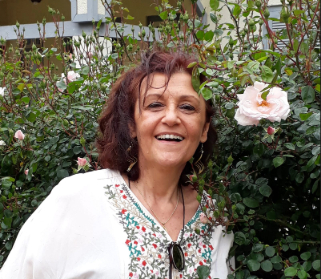 Written by Luzia Casali, volunteer with Iron Rose Sister Ministries in Rio Grande do Sul, Brazil
When I was a teenager, I was extremely impulsive. Impatient. I wanted everything done yesterday. Toward the end of high school, my father gave me something to think about:
"Luzia, it takes a hen 21 days to hatch an egg at a temperature of 98.6°. What would happen if I raised the temperature to 120°?"
I replied, "The egg would cook; there would be no chick."
He asked again, "What if I took the egg away from the hen after 15 days?"
I answered, "The chick wouldn't be ready."
The moral of the story: In life, there is a right time for a task to be completed—neither sooner nor later.
Just as I had an earthly father who gave good advice, we have a Heavenly Father who guides us in Jeremiah 29:11 (NIV): "For I know the plans I have for you," declares the Lord, "plans to prosper you and not to harm you, plans to give you hope and a future."
He is the One who holds the plans for each of us. These plans cover every area of our lives and unfold according to His timing.
Discipleship training is one of those. We need to pray and trust God throughout the process.
The Bible gives us an example of someone who tried to remove the egg before the chick was ready and suffered the consequences.
Let’s consider the case of Sarai in Genesis 16. God had made three promises to Abram in Genesis 13: a son, the land, and the Descendant. It was God Himself who made the promise, stating that Sarai would have a son. Feeling that the process was taking too long, she took matters into her own hands. She offered her Egyptian slave, Hagar, to Abram, and Hagar conceived. Believing herself superior to her mistress because she was able to get pregnant, Hagar began to look down on Sarai. Sarai, feeling disrespected, began to mistreat Hagar—with Abram’s consent. Unable to bear the pressure, Hagar fled into the desert (pregnant, without food or water). However, our merciful God intervened and sent an angel who told her to return and submit to Sarai. Yet, He instructed Hagar to name her son Ishmael—which means "God hears"—and prophesied that he would be a rebellious and independent man, constantly in conflict with others.
The Ishmaelites were, in fact, a contentious people, living in constant hostility toward all their brethren (Ge 25:17–18).
They were nomadic traders who even dealt in slaves. We must not forget that it was the Ishmaelites who bought Joseph from his brothers (Ge 37:28).
Although Sarai took the egg before it hatched, God honored the promise He had given to Abram. Nevertheless, consequences followed—specifically, the Ishmaelites' conflict with other peoples. Yet God did not change His plans; He fulfilled the promise made to Abram: Isaac (the son), Israel (the nation), and our Lord and Savior Jesus Christ (the Descendant).
Likewise, we cannot rush the training of disciples. There is a right time for each one to mature in faith and bear fruit. We must always bring disciples, their studies, and their quality time with the Father before the Throne of God.
If we remove the egg too soon—fail to allow sufficient time for the disciple to be prepared for work in the Church—there can be various consequences. Here are a few of them:
- Burnout and Frustration: The disciple faces responsibilities without the means to handle them, leading to stress, frustration, and discouragement—failing to disciple others and, in the worst-case scenario, an abandonment of the faith.
- Division and Conflict: Immaturity and/or a lack of proper knowledge can lead to hasty decisions or unwise use of the Word, causing friction within the congregation.
- Departure from Sound Doctrine: Without adequate knowledge, the disciple may compromise the preaching of the pure Word.
- Wounds within the Congregation: Unprepared individuals can emotionally hurt other members due to a lack of discernment or psychological and/or spiritual preparation.
Just as God had plans to send the Savior—plans that were not obstructed—we must realize that making disciples is part of God's plan: training them to make other disciples (Mt 28:19–20) and trusting that He is the One who brings the growth (1Co 3:6). We cannot try to take matters into our own hands as Sarai did because there will be consequences.
My comfort lies in knowing that, just as God did not change His plans to send the Savior, He will not change His plans for the Word to be preached.
May God bless us.
-
Scattering the Seed
Written by Kim Solis, volunteer with Iron Rose Sister Ministries in Oregon

As I sit at my desk in Keizer, Oregon, looking out at the barren winter landscape, contemplating this blog post on the process of bearing fruit, I am munching on a special treat produced by bushes in my own back yard: frozen blueberries - sweet and satisfying, a reminder of the abundant late summer harvest. It’s funny, I am a terrible gardener, yet these bushes produce the most delicious berries. Why? I know there are external factors that affect plant growth — rain levels, sun, temperatures— but I also know that I haven’t done anything to control those factors except turn on the sprinkler system so they would survive in the summer heat. My bushes bear fruit simply because it’s what healthy blueberry bushes do.
When I apply this to my own process of bearing fruit, I am struck by two thoughts and verses.
- Our theme verse for this year
John 15:8 says that when we bear fruit, we are giving glory to God and showing ourselves to be His disciples.
I would not know what kind of bushes were in my yard if not for the fruit they bear. One year, I cut them back too much for the winter, and they didn’t produce any fruit the next summer. I thought I had killed them, but thankfully, the year after that, they produced even more abundantly than ever, and the berries were even larger and sweeter than before. That is a whole other analogy to draw from, but the point is clear – fruit lets us know the kind of plant and the state of its health.
I invite you to analyze just what kind of fruit you are producing and what it says about your relationship with God. Can people tell you are a disciple by your fruit?
- The Parable of the Sower in Matthew 13
When I moved into this house nearly four years ago, there were also two empty garden beds waiting for seed to be sown. I have tried corn, squash, tomatoes, peppers, and now blackberries and raspberries. I have seen plants grow and wither, weeds sprout and flourish, crops sickly and abundant, and the words of the parable have become images in my mind, proven by my own garden. Some seeds bear fruit, and some do not.
While the fate of my harvest has largely been due to my diligence or lack thereof, 1 Corinthians 3:7 makes it clear that, when speaking of spiritual fruit, “neither he who plants nor he who waters is anything, but only God who gives the growth” (ESV).
So, if I do not actually control the growth, what then is my role in the production of fruit for the Kingdom?
I am simply the sower, scattering seed as I go along my way… as I go to school, as I go to work, as I interact with those around me. Like a dandelion head, white and fuzzy, caught by a breeze.
Seeds are simply the product of the fruit that already exists; the part that is dispersed in hopes it will take root and bring forth another plant. When the Word of God takes root in our hearts, it produces the fruit of the Spirit: love, joy, peace, patience, kindness, goodness, faithfulness, gentleness, and self-control, and when this fruit matures, it overflows into the lives of those around us through our Christ-like actions, sowing itself in the soil of their hearts. Our fruit is not our zeal, our obedience, our sinlessness, or our knowledge, but rather the way we act and interact with others.
What fruit is evident in your life, words, and actions?
What seeds are you sowing in the hearts of those around you?
-
She Did What She Could – Pruning
Written by Ayane Nayara, Brazil Assistant for Iron Rose Sister Ministries

In the northeast region of Brazil, where I live, we are in the time of year when the fruit trees are full of their fruit. It's a beautiful sight to see; our eyes are filled with the beauty of each fruit, with its different shape and color. After this season, the farmers who care for these trees have the job of cleaning them, removing dead branches and leaves, and adding fertilizer, preparing them for the following seasons so that, in due time, they will bear fruit again.
I once lived in a house with a huge mango tree in the yard. It was beautiful. When I first moved in, I thought, "I'll eat plenty of mangoes when the time is right." The time for that mango tree to bloom came, and it did, just like all the others in the region, but when the time came for the flowers to turn into fruit, they began to fall. While all the mango trees I saw around the city were laden with fruit, the one in my yard was empty. I found out that my tree hadn't borne fruit for years.
Jesus often used illustrations from agriculture and fishing to teach people about the message of the Kingdom and the Gospel, and I particularly enjoy these illustrations because I appreciate this way of life. On two occasions (Jn 15:1-6 and Lk 13:6-9), He tells His disciples two parables. The first is about the true vine, and the second about a fig tree that did not bear fruit. Reading them allowed me to reflect on some points that I want to share with you.
- If you or I are not bearing fruit, we should repent (Lk 13:6-9)!
We were called to be part of a Kingdom where each one plays their role, and that is a privilege. We were dying, useless branches that by ourselves were incapable of producing anything, and we were connected to a tree that made us capable of producing fruit. So, let's bear fruit! God has given us, through Christ, a new chance, and we cannot waste it. We cannot occupy a space that could be filled by someone who would bear fruit, without bearing any fruit at all. We must be fruitful! Or we will be like that mango tree in my yard, blossoming – pretending that we will bear fruit, but that fruit never comes to be (Col 1:21-23).
- We need to be pruned of our old habits so that we can bear more fruit, and better fruit (Jn 15:2).
And that is exactly what God wants to do with each of us who are in Christ--To prune us so that we may be more fruitful. But what would this pruning entail?
The Greek term for pruning is also used for cleansing. God, our Father, wants to cleanse us. The reason a farmer prunes trees, removing dead branches and leaves, is so that the plant doesn't waste its energy and nutrients on things that are not worth cultivating and that hinder the growth of the fruit. God wants to cleanse us of what can hinder our fruitfulness. Surely there are some twigs of sin in our hearts that drain our energy and hinder our growth, and that is exactly what God wants to remove from our hearts.
For you have been born again, not of perishable seed, but of imperishable, through the living and enduring word of God. (1Pe 1:23 NIV)
Therefore, rid yourselves of all malice and all deceit, hypocrisy, envy, and slander of every kind. Like newborn babies, crave pure spiritual milk, so that by it you may grow up in your salvation. (1Pe 2:1-2)
- There is no other way to bear fruit except by remaining in Jesus Christ (Jn 15:5).
We can observe that while Jesus speaks to His disciples in John 15:1-6, He repeats the word "remain" at least six times. Clearly, He wanted to convey to them the importance of this attitude. To bear fruit and continue to be cleansed by our great Gardener, we need to remain in Christ. There is no other way to grow. We are incapable of producing anything or even sustaining ourselves alone. Without Christ, we are nothing more than dry and dead branches.
Finally, sisters, God expects from us what we were called to do – bear fruit. This work is a two-way street: our surrender in allowing ourselves to be cleansed and used by our Gardener, and His work in us, pruning and cleansing our hearts of all that hinders our development.
Reflect:
What is hindering the growth of your fruit and needs pruning? Are you willing for this pruning to happen? -
Surrendered Lives
 Written by Deanna Brooks, volunteer with Iron Rose Sister Ministries in Arkansas
Have you noticed how sometimes God does the unexpected?
When we read Matthew’s genealogy of Jesus, five women are listed in the group. Why are these women listed? None of them would have been accepted by the religious leaders for various reasons, but our Heavenly Father chose them to be in the ancestral lineage of His Son.
Tamar - She probably was a Gentile… not an Israelite. She married the two older sons of Judah, who were each described as wicked (Ge 38:7,10). Tamar pretended to be a prostitute when she realized Judah was not going to allow her to marry the third son. One of the twins she bore from the encounter with Judah became an ancestor of Jesus.
Rahab - She was a Canaanite, a resident of Jericho, described as a prostitute or harlot. When the spies entered her city, she gave them refuge. Then, she told them that she knew what their God had done in Egypt and through the years, and asked for protection when they came to conquer Jericho (Jos 2:8-13). Rahab is mentioned as having faith in Hebrews 11. She and her family were saved during the destruction of Jericho because she gave a friendly welcome to the spies. She married Salmon, an Israelite, and was the great-great-grandmother of King David.
Ruth - She was from the land of Moab. Deuteronomy 23 prohibits marriage with Moabite men, because they had not welcomed the Israelites as they were passing through the land on their way to the Promised Land. Ruth had accepted the faith of Naomi and become a follower of YHWH (Ru 1:16). She returned with Naomi to Bethlehem and cared for her. Ruth married Boaz, son of Rahab, and she was the great-grandmother of King David.
Bathsheba - She was an Israelite married to Uriah the Hittite, one of David’s mighty men. King David took Bathsheba into his private chamber while Uriah was away at war, and she became pregnant with David’s child (2Sa 11). Was she a willing participant, or did she resist? Scripture does not say. She would probably have been bathing in an enclosed courtyard with an open roof when David saw her. Only someone who was at a higher elevation could have seen her. I believe it is fair to say David took advantage of a situation he accidentally encountered, and because of his power as king and the status of women, she probably could not resist. When David arranged the death of Uriah, he took Bathsheba as his wife. She gave him four sons after the first one died. Nathan was the third son of the four who lived and was in the lineage of Jesus.
Mary - She was an Israelite to whom the angel Gabriel appeared and told her that she would become the mother of God’s Son. We aren’t told what went through her mind as she realized she was facing a pregnancy out of wedlock… a situation where there would be whispers and accusations… a situation punishable by stoning. Mary’s submission is seen in Luke 1:38 when she tells Gabriel, “Behold, I am the servant of the Lord; let it be to me according to your word” (NIV).
Each of these women was in a circumstance they did not create, and which was beyond their control. God used them to serve His purpose… just as He can use each of us.
Take a look at the situation each faced and think about how you might have responded.
Tamar was widowed twice and bore twins through an illicit relationship.
Rahab was a harlot, entertaining men for a living, but gave protection to the spies.
Ruth was widowed and left her homeland to care for her mother-in-law.
Bathsheba was a married woman, called by the king for an adulterous evening and became pregnant while her husband was away at war. She is thought by many scholars to be the woman mentioned in Proverbs 31 who advised King Lemuel, possibly a nickname for King Solomon.
Mary found favor with God, was engaged to Joseph, but she was carrying a child out of wedlock… a pregnancy with a story many would not believe.
Each of these women trusted in God.
Do we trust in God when life circumstances take us down an unexpected path?
-
That's Not My Gift
 Written by Abigail Adriana Loayza Becerra, volunteer with Iron Rose Sister Ministries in Cusco, Peru
Instead, speaking the truth in love, we will grow to become in every respect the mature body of him who is the head, that is, Christ. From him the whole body, joined and held together by every supporting ligament, grows and builds itself up in love, as each part does its work. (Eph 4:15-16, NIV)
This is to my Father’s glory, that you bear much fruit, showing yourselves to be my disciples. (Jn 15:8)
How many times have we heard or said: "That's not my gift"?
We often say that when someone invites us to serve, to teach, to evangelize, or even just to listen. Without realizing it, that phrase becomes a shortcut to avoid commitment and an excuse not to participate in the mission that Jesus left us. It is true that God has given each of us different gifts. The Bible tells us that the body of Christ is made up of many parts and each one fulfills a different function: some teach, others encourage, others serve, others lead, others show mercy, etc., etc. And having different gifts does not mean that some believers are exempt from bearing fruit or making disciples.
Ephesians 4 explains that each member of the body contributes something indispensable to the Church. When each member uses the gifts God has given them, the body grows, becomes stronger, and reflects the love of Christ. The problem begins when we hide our talents behind phrases such as "that's not my gift," "I'm not good at that," or "it's better for someone else to do it." Many times, it is not a lack of capacity, but fear, comfort, insecurity, or lack of willingness.
Nor did Jesus say that only some should bear fruit. In John 15:8, He affirms that the Father is glorified when we bear much fruit and prove that we are His disciples. Bearing fruit doesn't just mean preaching from a pulpit. We bear fruit when we disciple someone, when we serve with joy, when we show hospitality, when we listen to those who need comfort, when we manage our resources well, or use our abilities to bless others.
The gifts God gives us are not for our own benefit, but for the edification and growth of the Church so that others may know Christ. Every gift, every talent can be a tool to spread the Kingdom of God. Many times, we expect to feel prepared to serve, but if we are willing to use the gifts God gave us, even if we feel unprepared, He will empower us as we act in obedience (like Moses, Deborah, Gideon, and many more).
Maybe your gift is teaching, singing, encouraging, evangelizing, organizing, cooking, writing, listening, administering, etc. No gift is too small when it is used with love, willingness, and above all, with the intention of glorifying God. One of the most important things is that we do not go around comparing gifts, but instead that we focus on being faithful to God with the gifts He has entrusted to us.
When we stop making excuses and serve willingly and intentionally, and when each member decides to take the place God has prepared for them, we discover that God can do more than we can imagine. We will see lives transformed, we will see the Church grow, we will see people being strengthened. Let us not allow the phrase "that is not my gift" to prevent us from obeying Christ's call for us, but let us instead ask ourselves, "How can I use what God has already placed in my hands to bear fruit and make disciples?" In the end, we may not be remembered for the gifts we had, but rather for our faithfulness in using them for the glory of God.
What gift, talent, or ability has God given you that you may have been putting aside out of fear or excuses, and how can you begin to intentionally use it to bear fruit and make disciples this week?
-
The Gospel Is Bearing Fruit That Will Last
 Written by Katie Forbess, Board President of Iron Rose Sister Ministries in Missouri
You did not choose me, but I chose you and appointed you so that you might go and bear fruit—fruit that will last—and so that whatever you ask in my name the Father will give you.(Jn 15:16 NIV)
Iron Rose Sister Ministries actively does things to help women by equipping and encouraging them to grow closer to God and one another, bearing fruit that will last, and hearing their prayers along the way.
Last year, the theme of “Practice like a Wise Woman” shook the ministry and blessed it in ways never imagined. Thankfully, we trusted and sought wisdom, and we truly moved in the ways we felt God calling us. Not perfectly, but faithfully.
That Godly wisdom brought us this year’s theme of “Bear Fruit,” which will touch many parts of our lives and relationships. Personally, I have come to define bearing fruit as this: When I am living in such a way that I am connected to God, like a healthy vine to the branches, and I allow God to work through me, fruit is produced.
While remaining in the love of God, I believe part of bearing fruit is the fruit of the Spirit in me, and another part is the sharing of the truth of the gospel of Christ to someone in a way that they become capable of reproducing that gospel themselves. And all future fruit will go on to do the same. The fruit of more disciples will last long past my time here on earth, and long past the people who know me or will even know about me. This fruit is eternal, so it will last in heaven. In the end, I believe we will all feel connected to the same Vine and the same roots and truly be one in Christ.
On a personal level, as I look at this year, I see there will be a lot of changes, such as a son who will be graduating and going to college, a daughter who could be engaged by the end of the year, and another daughter who plans to start driving by the end of the month. There are always changes. There will be ups and downs. Joys and sorrows. The real question is: Will I bear fruit that lasts during these times?
I’m reminded of Abraham, whom God told that his family would be as numerous as the stars. It took a few failed attempts on Abraham's part and a baby born many generations later to completely fulfill that promise. That baby grew up to make disciples, died for the sins of the world, and then arose, sending all His disciples to go out and make disciples.
The fruit that God is asking me to bear is only possible through this blessing of Abraham’s descendent, Jesus Christ. Abraham could never have known how eternal his fruit would be. The fruit we bear is under God’s control, as well. I may never truly understand what will happen with the fruit He has called me to bear. What a blessing to be part of something so much bigger!
How can we bear fruit that will last during this time in our lives?
How can we trust God with the eternal impact of the fruit we will bear in His name?
-
The Multiplication Model of Bearing Fruit
 Written by Deanna Brooks, volunteer with Iron Rose Sister Ministries
2 Timothy 2:2 reads: “What you have heard from me in the presence of many witnesses entrust to faithful men, who will be able to teach others also” (ESV).
Paul is reaching the end of his life, and he wants this precious message to continue to be passed on.
“Entrust” indicates responsibility and stewardship. “Faithful” means those who will treasure what they have and handle it as God intended.
We, as disciples of Jesus, are the only way others will learn about Jesus and why He came to earth. We have been given a mission, and in John 15, Jesus shares His plans with His disciples.
Jesus paints a word picture of Himself as the Vine and His disciples as the branches that bear the fruit. Some of His statements are:
Verse 2: “Every branch in me that does not bear fruit he takes away, and every branch that does bear fruit he prunes, that it may bear more fruit.”
Verse 4: “Abide in me, and I in you. As the branch cannot bear fruit by itself, unless it abides in the vine, neither can you, unless you abide in me.”
Verse 5: “Whoever abides in me and I in him, he it is that bears much fruit, for apart from me you can do nothing.”
Verse 8: “By this my Father is glorified, that you bear much fruit and so prove to be my disciples.”
Verse 16: “You did not choose me, but I chose you and appointed you that you should go and bear fruit and that your fruit should abide, so that whatever you ask the Father in my name, he may give it to you.”
When a branch bears fruit, it provides the way by which other fruit can be produced. The branch that does not bear fruit is considered dead.
If you have ever grown a garden or fruit trees, you know an important part of having a healthy plant is to cut off dead or diseased limbs, so they do not weaken the healthy branches. Likewise, Jesus says He will remove those branches that are not bearing fruit.
Some of Jesus’ last words were, “Go therefore and make disciples of all nations…” (Mt 28:19).
There is joy in seeing someone you have taught become a follower of Jesus.
“Each one teach one” is a common saying among believers, indicating each of us is responsible for reaching someone who can then reach someone else, just as 2 Timothy 2:2 says.
Teaching about Jesus should be a normal part of our lives. Deuteronomy 6:4-9 emphasizes the importance of teaching when you sit in your house and when you walk by the way, when you lie down, and when you rise.
Some ways to reach out to others are:
- Invite someone to VBS, gospel meetings, or a Bible study.
- Invite your friend for coffee and tell her you have good news you want to share… Then share your faith story and the path that led you to be a Christ follower (to discipleship).
- When you are with a friend, ask what she believes, then listen. Be ready to share your common beliefs, but if she mentions something not in Scripture, gently ask where she gets the authority for what she said.
- When you are asked a question, turn to Scripture instead of sharing your opinion.
- Stay “on target” in your study with others.
If you do not know how to teach someone, find a friend who does and ask them to help you learn. It may be that you are like Andrew and can seek people out and invite them to a Bible class or worship services, leaving the more formal teaching to someone else.
It is important to be alert and realize when a friend may be receptive. Life changes often create an interest that has not been present. When a new family moves into the neighborhood and is making new friends can be an excellent time to set up a study.
For us, it is important to:
- know who our authority is.
- know what and why we believe.
- be willing to search if asked a question we don’t know.
Are you willing to put 2 Timothy 2:2 into practice in your life?
-
The Prayer of a Righteous (Wo)Man Is Powerful and Effective
 Written by Corinne Faneus, Ministry Coordinator at Iron Rose Sister Ministries
“Well, there is nothing left to do except pray.”
“Sorry, I can’t do anything else, but I’ll pray for you.”
“The least I can do is pray.”And the prayer offered in faith will make the sick person well; the Lord will raise them up. If they have sinned, they will be forgiven. Therefore confess your sins to each other and pray for each other so that you may be healed. The prayer of a righteous person is powerful and effective. (Jas 5:15-16 NIV)
We read throughout the Scriptures multiple prayers that had incredible and powerful results—Hannah in 1 Samuel 2, Hezekiah in 2 Kings 19, and Elijah in 1 Kings 17 and 18. Prayer is shown countless times as the means by which we put our faith and trust in God as the means for God to fulfill His promises and plans in our lives. Yet, often unintentionally, with our own words, we take away the very power that prayer holds. Like the phrases above, we often minimize prayer as a last resort or as a small, almost insufficient service to those around us.
Prayer is one of the greatest gifts we have been given. That God allows and plans for our prayers to be how He is moved to action is amazing, confusing, wonderful, mysterious, and awe-inspiring. God’s hand is moved by the prayers of His creation.
If we know all this to be true about prayer, how can we be women who offer powerful and effective prayers? How can our prayers bear fruit?
It may sound cliché, but for our prayers to be powerful and effective, we must have faith in God— faith that our prayers serve a purpose, and faith that God is working through our prayers. We can often wonder, “What difference will our prayers make? If God is sovereign and has everything all planned out, what difference does it make to pray for a dear friend to be healed from sickness? Does it really matter if I pray for my unbelieving relative, if God’s will is going to be accomplished regardless?”
“Jesus replied, ‘Truly I tell you, if you have faith and do not doubt, not only can you do what was done to the fig tree, but also you can say to this mountain, ‘Go, throw yourself into the sea,’ and it will be done.’” (Mt 21:21)
Our prayers of faith make all the difference, not because we can change God’s plans, but because part of God’s plan is that we pray! We pray to bring about what God has planned. Do you trust and believe that your prayer is part of God’s sovereign plan? Do you believe that God has planned to act because of your prayer?
In James 5:17, we see James give an example of a righteous person’s powerful and effective prayer, “Elijah was a man with a nature like ours, and he prayed fervently that it might not rain, and for three years and six months it did not rain on the earth” (ESV). Being a spiritual superstar like Elijah is not what makes our prayers effective and powerful. James points out to us that Elijah was a man with a nature like ours; he was a normal human being who prayed. He was just a man who prayed fervently, and his prayers were answered. Normal average women like you and me have that same ability as Elijah because prayer is about God and not about us. Just like Elijah, we can be righteous by offering fervent, faith-filled prayers.
Ordinary women submitted to God can offer effective and powerful prayers because we pray to an extraordinary God.
-
Through Sacrifice and Discipline: Thy Will Be Done
Written by Caroline Prieto, volunteer with Iron Rose Sister Ministries in João Pessoa, Paraíba, Brazil

Adolescence was one of the phases of my life when I felt most disciplined by my parents. At 13 years old, I decided to give my life to the Lord and was baptized. Years later, I remember that my school friends lived things I had never experienced. Many of my classmates went to parties regularly, and my parents never let me go. You can imagine that for a teenager's mind, it wasn't the best feeling to be excluded by not doing what everyone else did, even though I had chosen to be a Christian. Several times I begged my parents to let me go to parties with my school friends, but the answer was always: no!
I remember once confiding in one of these classmates. I mentioned that I was very frustrated because I felt my parents wouldn't let me do everything I wanted – like going out to parties like everyone else. My classmate's response is still vivid in my mind. She said, "I wish my parents wouldn't let me go to all the parties either. They always let me do whatever I want… sometimes I feel like my parents don't even care about me."
I was speechless. I could be sure that my parents loved me. Look, I don't think my classmate's parents didn't love her, but maybe they believed they were doing the best for her, according to the context in which they lived. They weren't Christians, so they probably believed that the best way to be good parents was to never forbid anything.
At that moment, it was as if everything made sense to me. Today, years after that conversation, I can look back and feel even more the immense love my parents had for me. The prohibitions, in fact, were pure discipline. It was an attempt to keep me from losing myself. Today, I understand that my parents were looking out for my best interests and were affirming their love for me.
Similarly, but even more profoundly, God also does this with us. Take a look at what is written in Hebrews 12:10-11 (NIV).
They disciplined us for a little while as they thought best; but God disciplines us for our good, in order that we may share in his holiness. No discipline seems pleasant at the time, but painful. Later on, however, it produces a harvest of righteousness and peace for those who have been trained by it.
How can I accept being called a daughter of God and reject His discipline for me? Discipline is a gift to children!
Look at how great the love of our Father is: when God allows us to be disciplined, He is affirming that we are legitimate daughters, even when we are considered illegitimate by the world.
I want to invite you to reflect on some reasons to see God's discipline as something good for us, based on the verses in Hebrews chapter 12:
- Discipline is a clear sign that we are children of God and that He loves us.
...because the Lord disciplines the one he loves, and he chastens everyone he accepts as his son. Endure hardship as discipline; God is treating you as his children. For what children are not disciplined by their father?(Heb 12:6-7)
- The purpose of discipline is our own well-being.
- Through discipline, we can participate in God's holiness.
They disciplined us for a little while as they thought best; but God disciplines us for our good, in order that we may share in his holiness.(Heb 12:10)
Sharing in God's holiness is an inheritance, and only His children receive it!
It's as if God were telling us, “You are my beloved daughter. I want what's best for you, and I want you to share in holiness with me... that's why I'm disciplining you!”
But what does it actually mean to be disciplined by God?
It means we are required to go through corrections and processes that are permitted by Him, not as punishment for rejection, but as proof of love and care, with the goal of making us more like Christ.
In practice, this discipline can manifest in various ways, for example: through the Word of God, through our brothers and sisters in Christ, through the Holy Spirit, and even through the consequences of our wrong choices.
I would like to conclude this blog with a quote from Albert Barnes: "I have never known a Christian who was not benefited by afflictions."
However difficult it may be, everything we experience works together for the good of being transformed into the image and likeness of Christ. What a privilege!
I know that during my adolescence, it wasn't pleasant being disciplined by my parents, but today I can see the fruits I've reaped. Our God is also disciplining us today so that later we can produce fruit of righteousness and peace.
I encourage you to see God's daily care for you through discipline.
Have no doubt about the greatness of our Father's love.
How have you experienced the Lord's discipline in your life? Reflect on this!
-
We Will Bear Fruit If We Follow God’s Commands

Written by Jocelynn Goff, volunteer with Iron Rose Sister Ministries in Arkansas
I planted a garden again this year and I am anticipating the harvest of tomatoes, cucumbers, eggplant, and peppers. I’m especially looking forward to one of my favorites: a crisp cucumber and fresh tomato sandwich. A fresh tomato on a BLT (bacon, lettuce, and tomato) sandwich may be your favorite, or a cucumber tomato salad, or canning fresh salsa. Whatever it is, if it comes fresh from the garden it’s always better than store-bought. But it’s often hard to know if this will be an abundant harvest with plenty to share or just a lot of hard work for a disappointing harvest.
However, we know that if God plants a garden or vineyard the harvest will be plentiful and it will not disappoint. As we read in Zecharaiah 8:12 (CSB) “For they will sow in peace: the vine will yield its fruit, the land will yield its produce, and the skies will yield their dew. I will give the remnant of this people all these things as an inheritance.” This is a promise from God to the remnant of Israel. God is telling them that He will supply an abundance for them.
As we read further in Zecharaiah 8 we see that there are conditions requiring obedience that are a part of this promise. Zecharaiah 8:16 says, “These are the things you must do: Speak truth to one another, make true and sound decisions within your city gates. Do not plot evil in your hearts against your neighbor, and do not love perjury for I hate all this – this is the LORD’s declaration.”And, get this, if they act in obedience to this, then the result as Zecharaiah 8:22-23 shares, “Many people and strong nations will come to seek the LORD of Armies in Jerusalem and to plead for the Lord’s favor. The LORD of Armies says this: “In those days, ten men from nations of every language will grab the robe of a Jewish man tightly, urging: Let us go with you, for we have heard that God is with you.”
So, God gives the remnant a fruitful harvest to enjoy if they obey His commands, and the result is another type of fruit. This is the fruit of someone who wants to know about the LORD.
This is a pretty amazing progression of fruit, obedience, and bearing fruit.
However, I know you may be thinking this is an Old Testament situation and doesn’t apply to today and to me. Let’s look at some other New Testament scriptures. John 13:34 Jesus says, “I give you a new command: Love one another. Just as I have loved you, you are also to love one another. By this everyone will know that you are My disciples, if you love one another.”Applying the principle of following our Lord’s commands, if we love one another—and love is one of the fruit of the Spirit mentioned in Galatians 5:22—then the result will be that everyone will know that we are His disciples.
This is that double fruit. Fruit within us and then fruit around us because they know we are His.
To carry this thought further we know that the fruit of love is not from our own effort. We need to die to ourselves much as a seed dies when it is planted in order to produce a harvest. As John 12:24 reminds us, “Truly I tell you, unless a grain of wheat falls to the ground and dies, it remains by itself. But if it dies, it produces much fruit.”
In addition, in Romans 7:4b we also bear fruit through the body of Christas it says, “You belong to Him Who was raised from the dead in order that we may bear fruit for God.” If we belong to Him then we may bear fruit. This reminds me of the words of Jesus in John 15:5, “I am the Vine; you are the branches. The one who remains in Me and I in him produces much fruit, because you can do nothing without me.”
Since I believe all Iron Rose Sisters want to bear fruit, then we must ask ourselves these questions:
- Am I obedient by practicing the fruit of the Spirit of love so others will know I am His?
- Have I become a seed and died to myself?
- Do I belong to the One who was raised from the dead?
- Am I remaining in Him because I can do nothing without Him?
Blessings to all my Iron Rose Sisters as we journey forward in obedience and bearing fruit.


See more photos on our Photo Gallery page.
(c) Iron Rose Sister Ministries. Site setup by Perfect Fit Web Design; Flag icons by Free Flag Icons